Quick wins for a faster PC:
Clear out junk files and repair common Windows errorsFree Scan →Fix the driver behind crashes, sound loss and screen glitchesFind Drivers →Choose Spring Drive if you value its tighter manufacturer-stated in-use accuracy and smoothly gliding seconds hand; choose a conventional mechanical Grand Seiko if the balance-and-escapement regulator is part of the appeal. Spring Drive is powered by a mainspring, not a battery, but uses an electronic regulator. The right choice also depends on the exact caliber and watch: accuracy, power reserve, functions, fit and service guidance vary by model.
How does Spring Drive work?
Both Spring Drive and conventional mechanical watches store energy in a mainspring and use a gear train to drive the hands. Their main difference is how they regulate the rate at which that energy is released.
| # | Preview | Product | Price | |
|---|---|---|---|---|
| 1 |
|
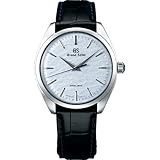
Grand Seiko Lake Suwa Omiwatari Elegance Watch SBGY007 | $8,750.00 | Buy on Amazon |
| 2 |

|
SEIKO SRPB41 Automatic Watch for Men - Presage Cocktail Time - Patterned Blue Dial with Date... | $399.00 | Buy on Amazon |
As an Amazon Associate I earn from qualifying purchases.
Spring Drive: a mainspring with electronic regulation
As the mainspring unwinds, it turns the gear train and a component called the glide wheel. The glide wheel generates a small electrical charge that powers a quartz oscillator and integrated circuit; there is no battery supplying the watch’s operating energy. The circuit monitors the wheel’s speed and uses electromagnetic braking to regulate it. The gear train then drives the hands, including the characteristic smooth-gliding seconds hand. Grand Seiko’s Spring Drive explanation describes this architecture.
Do these 3 things before closing this tab:
1Fix the driver behind crashes, sound loss and screen glitches2Repair Windows errors before they cause bigger problems3Scan for outdated or missing drivers - takes under a minuteConventional mechanical: a balance and escapement
A mechanical caliber also draws energy from its mainspring, but a balance and escapement regulate its release. The seconds hand’s motion reflects that movement’s cadence rather than Spring Drive’s continuous glide. Grand Seiko describes the regulating unit as the key distinction between its mechanical and Spring Drive watches. It says Spring Drive is less affected by temperature changes and watch position; that is the manufacturer’s explanation, not a head-to-head independent test. Grand Seiko’s instructions cover both movement types.
#1 Best Overall
- Three-fold clasp with push button release
- Dual-curved sapphire crystal
- Power reserve display on the back
- Power resrve Approx. 72 hours(3 days)
How accurate is Grand Seiko Spring Drive?
Grand Seiko’s support guidance gives Spring Drive an average monthly gain or loss of ±15 seconds during normal wrist use between 5°C and 35°C. For its mechanical watches, the same guidance gives an in-use target range of −1 to +10 seconds per day and recommends assessing the mean gain or loss over seven to ten days. These are the manufacturer’s stated guidance, not results from an independent comparison. See Grand Seiko’s accuracy guidance.
Those broad support figures should not replace the specification for a particular caliber. Grand Seiko’s movement comparison lists the following examples; its pages do not state a publication year.
| Movement | Manufacturer-stated accuracy | Approximate power reserve |
|---|---|---|
| Spring Drive 9RB1 and 9RB2 | ±20 seconds per year (±3 seconds per month) | 72 hours |
| Spring Drive 9RA2 and 9RA5 | ±10 seconds per month | 120 hours |
| Spring Drive 9R01 | ±10 seconds per month | 192 hours |
| Mechanical 9SA4 and 9SA5 | Not stated in the cited movement comparison; consult the caliber specification and Grand Seiko’s in-use guidance above | Approximately 80 hours |
These are caliber-specific manufacturer figures, not universal limits for either family. Grand Seiko’s support guidance also distinguishes normal in-use mechanical accuracy from the movement-at-rest inspection certificate. Check the exact watch’s published specification before comparing rates. Spring Drive movement figures; mechanical movement figures.
What’s actually slowing this PC down?
Pick the symptom - the matching free tool is one click away.
Which should you choose?
Choose Spring Drive if precision and the seconds-hand glide matter most
The cited manufacturer guidance gives Spring Drive a tighter stated normal-use rate than the mechanical in-use target range. Its seconds hand also glides smoothly rather than displaying the cadence of a conventional mechanical regulator. If either trait is central to your choice, compare the exact caliber’s specification and, where possible, watch the seconds hand in person.
Rank #2
- STUNNING BLUE DIAL: this automatic men's watch features a deep blue, pressed pattern and gloss finish surrounded by a stainless steel watch case
- AUTOMATIC: these self-winding, automatic men's watches are powered by your movement, with a power reserve of 41 hours
- STAINLESS STEEL: features a durable stainless steel watch case and bracelet with see through caseback
- WATER-RESISTANT: these men's wrist watches are water-resistant down to 50 meters
- 4R35 CALIBER: equipped with the reliable caliber 4R35 automatic movement, this accurate men's watch keeps precise time
Choose mechanical if you want a traditional regulator
If the balance-and-escapement system is an important part of what you want from a watch, a mechanical caliber offers that architecture directly. Spring Drive is not battery-powered quartz, but its rate is electronically regulated; whether that distinction matters is a matter of preference.
Compare reserve against how you wear the watch
The examples above range from 72 to 192 hours for the cited Spring Drive calibers, while the cited 9SA4 and 9SA5 mechanical calibers have approximately 80 hours. A longer reserve can make a difference if you rotate watches or leave one unworn, but compare the exact caliber rather than assuming every watch in a movement family has the same reserve.
Pick the watch, not just the movement label
Movement family alone cannot tell you whether a watch has the functions or proportions you want. Compare each reference’s winding type, GMT or chronograph functions, date display, case dimensions, water resistance, bracelet, dial, price and availability. Those details are specific to the watch, and the evidence here does not establish current prices or stock.
Recommended Free Tools
What should you know about servicing?
Grand Seiko’s instruction recommends an overhaul every three to four years for Spring Drive. That guidance does not establish current service pricing or turnaround in a particular region. The available information also does not establish one equivalent universal interval for every mechanical caliber. Before buying, ask an authorized local service provider for current guidance and costs for the exact reference. Grand Seiko’s instruction page.
Quick Recap
Product prices and availability are accurate as of the date/time indicated and are subject to change. Any price and availability information displayed on Amazon at the time of purchase will apply.