AirPods can work as hearing aids, but only the supported AirPods Pro models. In a supported region, AirPods Pro 2 and AirPods Pro 3 can take Apple’s Hearing Test and use an eligible result to amplify environmental sound with Hearing Aid. You need a compatible iPhone or iPad, current software and firmware, a quiet room, and a secure ear-tip fit.
Yes—but only certain models. Apple’s current hearing-health workflow requires AirPods Pro 2 or AirPods Pro 3, a compatible iPhone or iPad, current software and firmware, a supported region, and a suitable ear-tip fit. Ordinary AirPods, AirPods 4, and AirPods Max do not use the same Hearing Test and Hearing Aid workflow.
Apple separates three related features:
- Hearing Test: plays tones and estimates your hearing ability, producing an audiogram-style result.
- Hearing Aid: uses an eligible result to amplify environmental sound through the AirPods in Transparency mode.
- Media Assist: applies hearing-based adjustments to music, video, and calls rather than amplifying the room around you.
The feature is intended for adults 18 and older with perceived mild to moderate hearing loss. It can be a practical at-home assessment and self-fitting tool, but it does not diagnose every cause of hearing difficulty or replace professional care when symptoms are sudden, severe, one-sided, painful, or otherwise concerning.
What you need before taking the test
- Compatible AirPods: AirPods Pro 2 or AirPods Pro 3. The AirPods must have current firmware.
- Apple device: A compatible iPhone or iPad is needed for the Hearing Test and initial Hearing Aid setup. After setup, Apple says the feature can also be used from a compatible Mac.
- Software: Use the latest compatible version of iOS or iPadOS. AirPods Pro 2 specifications identify iOS 18 or iPadOS 18 and later as the relevant software generation; Apple’s current device instructions should take priority if requirements change.
- Supported location: Hearing Test and Hearing Aid availability depends on regulatory authorization, so the controls may not appear in every country or region.
- Quiet conditions: The test takes about five minutes and should be performed in a quiet room.
- Correct fit: The AirPods need a good seal. Earwax, debris, damage, a loose fit, or the wrong ear-tip size can affect the test and the listening result.
If you are buying hardware specifically for this purpose, AirPods Pro 3 are the current-generation option identified for Apple’s Hearing Test and Hearing Aid experience. AirPods Pro 2 remain an officially supported previous-generation choice. The earbuds alone are not the complete solution: the Apple device, software, firmware, region, fit, and your hearing profile all matter.
How to take the AirPods Hearing Test
- Find a quiet room. Turn off or move away from fans, televisions, music, conversation, traffic noise, and other sounds. A noisy room can invalidate or interrupt the test.
- Check the AirPods. Make sure both AirPods Pro earbuds are charged, clean, and fitted securely. If Apple asks you to reposition an earbud or change the ear tip, follow the instruction.
- Connect them to your iPhone or iPad. Insert the AirPods Pro and wait for them to connect.
- Open the AirPods controls. In Settings, tap the name of your AirPods near the top of the screen.
- Choose “Take a Hearing Test.” If that option is missing, use the compatibility checks later in this guide.
- Follow the prompts. The test plays tones at different frequencies. Tap or respond when you hear a tone, following the onscreen instructions rather than guessing rapidly.
- Review the result. Apple displays a hearing-loss classification and frequency-specific results for the left and right ears.
- Save the result. Store it in the Health app. You can also export an audiogram PDF if you want a hearing professional to review it or compare it with another test.
Do not treat a result obtained in a noisy room or with a poor seal as definitive. If Apple says the room is too noisy, stop and repeat the test in better conditions rather than trying to work around the warning.
#1 Best Overall

- WORLD’S BEST IN-EAR ACTIVE NOISE CANCELLATION — Removes up to 2x more unwanted noise than AirPods Pro 2* so you can stay fully immersed in the moment.*
- BREAKTHROUGH AUDIO PERFORMANCE — Experience breathtaking, three-dimensional audio with AirPods Pro 3. A new acoustic architecture delivers transformed bass, detailed clarity so you can hear every instrument, and stunningly vivid vocals.
- HEART RATE SENSING — Built-in heart rate sensing lets you track your heart rate and calories burned for up to 50 different workout types.* With iPhone, you will have access to the Move ring, step count, and the new Workout Buddy,* powered by Apple Intelligence.*
- LIVE TRANSLATION — Communicate across language barriers using Live Translation,* enabled by Apple Intelligence.*
- EXTENDED BATTERY LIFE — Get up to 8 hours of listening time with Active Noise Cancellation on a single charge. Or up to 10 hours in Transparency using the Hearing Aid feature.*
How to turn on Hearing Aid mode
Once the Hearing Test is complete, Apple can use an eligible result to configure Hearing Aid. You can also use a previous Apple Hearing Test result or import an audiogram supplied by a hearing-care professional.
- Open Settings and tap the name of your connected AirPods.
- Open the hearing-health controls and select the Hearing Test result you want to use.
- Tap Set Up Hearing Aid.
- Tap Get Started, then Next.
- Tap Turn On Hearing Aid and complete the remaining prompts.
Depending on the result, Apple may recommend Media Assist instead of Hearing Aid. That does not necessarily mean the test failed. It means Apple is directing you toward the hearing-based adjustments intended for media and calls rather than the environmental amplification provided by Hearing Aid.
Hearing Aid versus Media Assist
| Feature | What it changes | Where you use it |
|---|---|---|
| Hearing Test | Measures responses to tones and creates a hearing result | During the test on a compatible iPhone or iPad |
| Hearing Aid | Amplifies environmental sound using your hearing profile | Primarily in Transparency mode, while listening to the room |
| Media Assist | Applies hearing-based adjustments to audio | Music, video, and phone or FaceTime-style calls |
If your AirPods make music or calls easier to hear but do not make nearby conversation louder, check whether Media Assist is enabled instead of Hearing Aid. Media Assist is not the same as room amplification.
Quick wins for a faster PC:
Fix the driver behind crashes, sound loss and screen glitchesFind Drivers →Repair Windows errors before they cause bigger problemsFix Now →Scan for outdated or missing drivers - takes under a minuteDriver Scan →Adjusting the hearing-aid experience
After Hearing Aid is enabled, Apple provides controls for several aspects of the sound. Depending on the version of the software and the feature’s availability in your region, you may be able to adjust:
- Amplification: how much environmental sound is increased.
- Left-right balance: whether the adjustment is weighted toward one ear.
- Tone: the character of the amplified sound.
- Ambient-noise reduction: how much surrounding noise is reduced.
- Conversation Boost: a mode intended to focus more attention on a person speaking in front of you.
Start with small changes. Excessive amplification can sound harsh, uncomfortable, or unnatural while you are adapting. Make adjustments in a familiar, quiet environment first, then evaluate them during ordinary conversations.
Rank #2

- REBUILT FOR COMFORT — AirPods 4 have been redesigned for exceptional all-day comfort and greater stability. With a refined contour, shorter stem, and quick-press controls for music or calls.
- ACTIVE NOISE CANCELLATION — AirPods 4 with Active Noise Cancellation help reduce outside noise before it reaches your ears, so you can immerse yourself in what you’re listening to.*
- HEAR THE WORLD AROUND YOU — The powerful H2 chip comes to AirPods 4. Adaptive Audio seamlessly blends ANC and Transparency mode — which lets you comfortably hear and interact with the world around you exactly as it sounds — to provide the best listening experience in any environment.* And when you’re speaking with someone nearby, Conversation Awareness automatically lowers the volume of what’s playing.*
- IMPROVED SOUND AND CALL QUALITY — Voice Isolation improves the quality of calls in loud conditions. Using advanced computational audio, it reduces background noise while isolating and clarifying the sound of your voice for whomever you’re speaking to.*
- MAGICAL EXPERIENCE — Just say “Siri” or “Hey Siri” to play a song, make a call, or check your schedule.* And with Siri Interactions, now you can respond to Siri by simply nodding your head yes or shaking your head no.* Pair AirPods 4 by simply placing them near your device and tapping Connect on your screen.* Easily share a song or show between two sets of AirPods.* An optical in-ear sensor knows to play audio only when you’re wearing AirPods and pauses when you take them off. And you can track down your AirPods and Charging Case with the Find My app.*
Apple says the most recently configured Hearing Aid settings are stored on the AirPods. Therefore, your iPhone or iPad does not need to remain nearby for those settings to continue working. You should still keep the AirPods charged and periodically reconnect them to check for software, firmware, or settings changes.
Can AirPods replace a hearing test from an audiologist?
No. The AirPods Hearing Test can provide useful information and, for eligible adults with perceived mild to moderate hearing loss, can support self-fitting. It is not a complete medical evaluation.
The Tool Desk
Outbyte PC Repair FREEClear out junk files and repair common Windows errorsFree Scan →Outbyte Driver Updater FREEFix the driver behind crashes, sound loss and screen glitchesFind Drivers →The FDA authorized Apple’s Hearing Aid Feature as over-the-counter hearing-aid software for compatible AirPods Pro hardware. That authorization is limited to the intended population and feature; it is not a blanket statement that every AirPods model is a hearing aid or that the earbuds diagnose all hearing disorders. FDA documentation describes a clinical study of 118 subjects in which self-fitting and professional fitting produced comparable perceived benefit for the same device.
A peer-reviewed 2026 validation study compared the AirPods Pro 2 Hearing Test with audiologist-administered pure-tone audiometry in adults who reported mild-to-moderate hearing loss. The study reported clinically acceptable accuracy and test-retest reliability in its sample. That supports using the test as a practical consumer assessment within its intended range, but it does not make every result interchangeable with a full clinical evaluation.
The test cannot, by itself, rule out earwax, an infection, middle-ear disease, nerve damage, medication effects, injury, or another medical cause. It also is not a treatment for severe or profound hearing loss.
Rank #3

- Active Noise Cancellation blocks outside noise, so you can immerse yourself in music
- Transparency mode for hearing and interacting with the world around you
- Spatial audio with dynamic head tracking places sound all around you
- Adaptive EQ automatically tunes music to your ears
- Three sizes of soft, tapered silicone tips for a customizable fit
When to see a doctor, ENT, or hearing professional
Arrange professional evaluation rather than relying only on AirPods if:
Do these 3 things before closing this tab:
1Fix the driver behind crashes, sound loss and screen glitches2Clear out junk files and repair common Windows errors3Scan for outdated or missing drivers - takes under a minute- hearing loss appeared suddenly or is getting worse quickly;
- one ear is significantly worse than the other;
- you have ear pain, drainage, dizziness, injury, or other unusual symptoms;
- you suspect the loss is severe or outside the mild-to-moderate range;
- you still struggle to hear in a quiet room;
- the AirPods result conflicts with your symptoms or a previous audiogram; or
- you want to investigate a possible medical cause before using amplification.
A professional audiogram can be imported into Apple’s setup instead of using only the AirPods result. A licensed audiologist, physician, or ENT can also determine whether wax removal, medical treatment, prescription hearing care, or additional testing is appropriate.
Safety limits: Hearing Aid is not Hearing Protection
Do not confuse amplification with protection. Hearing Aid is designed to make environmental sound easier to hear; it is not a substitute for certified occupational, industrial, or firearm hearing protection.
Apple notes that improper fit reduces attenuation and that its Hearing Protection feature is not suitable for extremely loud impulse sounds such as gunfire, fireworks, or jackhammers, or for sustained sound above 110 dBA. Turning on Hearing Aid does not make AirPods appropriate protection for those environments. Use purpose-built protection designed for the specific noise hazard and follow workplace or range safety requirements.
Troubleshooting common problems
“I don’t see Take a Hearing Test.”
Check these in order:
- Confirm that the earbuds are AirPods Pro 2 or AirPods Pro 3, not ordinary AirPods, AirPods 4, or AirPods Max.
- Connect the AirPods to a compatible iPhone or iPad.
- Install the latest compatible iOS or iPadOS update.
- Check that the AirPods have current firmware and sufficient charge.
- Verify that Hearing Test and Hearing Aid are authorized in your region.
- Reconnect the earbuds and open their settings again.
If the control still does not appear, the feature may simply not be available for that model, software configuration, or location.
Rank #4
- REBUILT FOR COMFORT — AirPods 4 have been redesigned for exceptional all-day comfort and greater stability. With a refined contour, shorter stem, and quick-press controls for music or calls.
- PERSONALIZED SPATIAL AUDIO — Personalized Spatial Audio with dynamic head tracking places sound all around you, creating a theater-like listening experience for music, TV shows, movies, games, and more.*
- IMPROVED SOUND AND CALL QUALITY — AirPods 4 feature the Apple-designed H2 chip. Voice Isolation improves the quality of phone calls in loud conditions. Using advanced computational audio, it reduces background noise while isolating and clarifying the sound of your voice for whomever you’re speaking to.*
- MAGICAL EXPERIENCE — Just say “Siri” or “Hey Siri” to play a song, make a call, or check your schedule.* And with Siri Interactions, now you can respond to Siri by simply nodding your head yes or shaking your head no.* Pair AirPods 4 by simply placing them near your device and tapping Connect on your screen.* Easily share a song or show between two sets of AirPods.* An optical in-ear sensor knows to play audio only when you’re wearing AirPods and pauses when you take them off. And you can track down your AirPods and Charging Case with the Find My app.*
- LONG BATTERY LIFE — Get up to 5 hours of listening time on a single charge. And get up to 30 hours of total listening time using the case.*
“The test says the room is too noisy.”
Move to a smaller, quieter room; pause fans and nearby audio; close windows; and ask other people not to speak during the test. Reseat both earbuds and try the ear-tip size Apple recommends. Replacement AirPods Pro ear tips can be useful if the existing tips no longer create a stable seal, but an accessory cannot overcome a genuinely noisy environment.
“The result looks inconsistent.”
Repeat the test only after improving the conditions. Clean the earbuds carefully, check that both sides fit securely, and avoid testing immediately after loud noise exposure. Save both results if necessary. If the outcome conflicts with your experience or an earlier audiogram, share the exported result with a hearing professional rather than assuming that repeating it has resolved the discrepancy.
“Hearing Aid is unavailable after the test.”
Possible explanations include:
- the result does not fall within the feature’s intended mild-to-moderate range;
- Hearing Aid is not authorized in your country or region;
- the iPhone, iPad, AirPods firmware, or AirPods model does not meet the requirements; or
- Apple has directed you to Media Assist based on the result.
Review the result and software requirements first. If you have symptoms that suggest more than mild-to-moderate hearing loss, seek professional evaluation rather than trying to force the feature to work.
“The earbuds amplify media but not the room.”
That behavior usually indicates Media Assist. Environmental amplification comes from Hearing Aid, which operates with Transparency mode. Media Assist applies hearing-based adjustments to music, video, and calls, so it will not necessarily make a person standing beside you louder.
Free tools Windows power users keep installed
One-click scans. No signup required.
AirPods Pro 2 versus AirPods Pro 3 for hearing features
| Question | AirPods Pro 2 | AirPods Pro 3 |
|---|---|---|
| Supports Apple Hearing Test? | Yes, with compatible software, firmware, region, and device | Yes, with compatible software, firmware, region, and device |
| Supports Apple Hearing Aid? | Yes, for eligible adults and supported regions | Yes, for eligible adults and supported regions |
| Is a compatible iPhone or iPad needed for initial setup? | Yes | Yes |
| Is fit important? | Yes | Yes |
The practical difference for this article is generation, not a promise that one model will work for every hearing profile. If you already own compatible AirPods Pro 2, there is no need to replace them solely to access the Hearing Test or Hearing Aid workflow. If you are purchasing new hardware, AirPods Pro 3 are the current-generation compatible option identified by Apple.
Bottom line
To use AirPods as hearing aids, connect AirPods Pro 2 or AirPods Pro 3 to a compatible iPhone or iPad, take the five-minute Hearing Test in a quiet room, and use an eligible result to choose Set Up Hearing Aid. Hearing Aid amplifies environmental sound in Transparency mode; Media Assist adjusts music, video, and calls.
Best Value
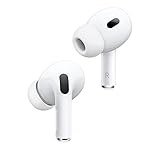
- This pre-owned product is not Apple certified, but has been professionally inspected, tested and cleaned by Amazon-qualified suppliers.
The experience is most appropriate for adults 18 and older with perceived mild to moderate hearing loss. Fit, cleanliness, battery charge, current software, firmware, and regional authorization all affect whether it works. For sudden, one-sided, severe, painful, rapidly changing, or medically suspicious hearing problems, arrange a professional evaluation instead of relying on AirPods alone.
Frequently Asked Questions
Can any AirPods work as hearing aids?
No. Apple’s Hearing Test and Hearing Aid workflow is for AirPods Pro 2 and AirPods Pro 3 with compatible Apple software, firmware, device, and regional availability. Ordinary AirPods, AirPods 4, and AirPods Max should not be described as supporting the same features.
How do I take an AirPods Hearing Test?
Open Settings on a connected iPhone or iPad, tap the AirPods name near the top, and select Take a Hearing Test. Complete it in a quiet room, then save the result in the Health app or export the audiogram PDF.
How do I turn on Hearing Aid for AirPods?
After the test, select an eligible result in the AirPods hearing-health controls, tap Set Up Hearing Aid, choose Get Started and Next, and then tap Turn On Hearing Aid. Apple may recommend Media Assist instead, depending on the result.
What is the difference between Hearing Aid and Media Assist?
Hearing Aid amplifies environmental sound through Transparency mode. Media Assist applies hearing-based adjustments to music, video, and calls. If media is louder but nearby conversation is not, Media Assist may be active instead of Hearing Aid.
Does the AirPods Hearing Test replace an audiologist?
No. The feature is intended for adults 18 and older with perceived mild to moderate hearing loss. Sudden, severe, one-sided, painful, rapidly worsening, or otherwise concerning hearing problems should be evaluated by a doctor, ENT, or licensed hearing professional.
What’s actually slowing this PC down?
Pick the symptom - the matching free tool is one click away.
The Bottom Line
AirPods Pro 2 and AirPods Pro 3 can provide Apple’s Hearing Test and Hearing Aid experience for eligible adults, but they are not a universal replacement for hearing care. Use the test in a quiet room, ensure a good seal, and remember that Hearing Aid amplifies the environment while Media Assist adjusts media and calls. Concerning, severe, sudden, asymmetric, or medically suspicious hearing problems still require a doctor or licensed hearing professional.