The Tool Desk
Outbyte Driver Updater FREEFix the driver behind crashes, sound loss and screen glitchesFind Drivers →Outbyte PC Repair FREEClear out junk files and repair common Windows errorsFree Scan →Verdict: The RayNeo Air 3S is an excellent low-cost pair of wired display glasses for indoor movie watching, travel and handheld gaming. At RayNeo’s current listed sale price of about $199, it delivers a sharp 1080p-per-eye Micro-OLED image, 120Hz support and surprisingly capable open-air audio. But it is not standalone AR: it needs a compatible phone, computer or console, and its USB-C port must support video output. Buyers who use the glasses outdoors or in bright rooms should consider the roughly $299 Air 3S Pro instead.
Check your device compatibility before buying. A USB-C connector alone does not guarantee that the glasses will work.
As an Amazon Associate I earn from qualifying purchases.
What the RayNeo Air 3S actually is
The Air 3S is best understood as a lightweight, wired external display worn like glasses. It mirrors or extends video from a compatible device through USB-C DisplayPort Alt Mode. RayNeo describes the image as a 201-inch virtual-equivalent screen viewed from six metres, but that is a viewing-angle comparison—not a physical 201-inch television.
What’s actually slowing this PC down?
Pick the symptom - the matching free tool is one click away.
The glasses do not contain a battery-powered operating system, streaming apps, cameras or six-degrees-of-freedom tracking. They cannot replace a phone, laptop, handheld console or streaming box. The image also follows your head rather than remaining anchored to a point in the room.
#1 Best Overall

- [Quantum Leap in Image Quality]:RayNeo's latest HueView empowers vision with 98% DCI-P3, ΔE <2 color accuracy, 200,000:1 infinite contrast, and 145% sRGB vibrant colors. Enjoy incredible detail on a 201" mega screen while watching the movies, TV shows, and games you love.
- [Rest-Assured OptiCare️]:Eye comfort is enhanced with RayNeo's exclusive OptiCare, which intelligently utilizes 3840 Hz DC dimming and PWM dimming to eliminate flickering and unstable color displays under varying brightness conditions. Additionally, the stepless brightness control satisfies various needs in different settings. TÜV SÜD Low Blue Light & Flicker-Free Certification guarantees low blue light emission, flicker-free operation, and comfort for long-term use.
- [Game, Movie & Standard: Magic among All]:Feel games come alive with infinite color details and a 120 Hz smooth refresh rate, delivering fluid, lag-free animations. Connect deeply with the movie characters and immerse yourself in captivating storylines. Or swipe to standard mode for everyday use.
- [Better Sound Surrounding]:Stronger bass from drums, clearer mids from vocals, and crisper highs from violin, all achieved through the world's first dual opposing acoustic chamber design like no others. And even more precise audio cues to win in the final moment.
- [Comfort Reminder]:For your comfort and the best viewing experience, we suggest giving your eyes (and yourself) a 10-minute break after every 30 minutes of use.
That makes the Air 3S closer to a private portable monitor than to a Meta Quest headset or a transparent heads-up AR display. RayNeo’s official product page lists direct wired operation and hardware controls without mandatory phone pairing for basic display functions.
Price and value
RayNeo’s store currently lists the standard Air 3S at about $199 on sale, down from a regular price of $269. Promotions can change, so treat that as a current price signal rather than a permanent price. The Air 3S Pro is listed at roughly $299, although exact variants and prices should be checked before purchase.
At $199, the Air 3S remains a compelling value for a personal screen used mainly indoors. The original $269 review-era praise from TechRadar, Tom’s Hardware and Android Central is understandable, but “unbeatable” is too broad now. The Pro’s higher brightness and newer competitors’ spatial-display features can justify spending more for particular users.
Do these 3 things before closing this tab:
1Clear out junk files and repair common Windows errors2Fix the driver behind crashes, sound loss and screen glitches3Repair Windows errors before they cause bigger problemsSpecifications
| Feature | RayNeo Air 3S |
|---|---|
| Display | Micro-OLED, 1,920 × 1,080 per eye |
| Refresh rate | Up to 120Hz |
| Brightness | 650 nits to-eye, according to RayNeo |
| Field of view | 46°, according to RayNeo |
| Colour coverage | 98% DCI-P3 and 145% sRGB, according to RayNeo |
| Contrast | 200,000:1, according to RayNeo |
| Audio | Four-speaker system with Whisper Mode 2.0 |
| Weight | 76g |
| Connection | USB-C DisplayPort Alt Mode; HDMI requires an adapter |
The colour, contrast, brightness and eye-comfort figures are manufacturer claims. The 1080p-per-eye panels are not 4K, even if the source device or adapter can output a higher-resolution signal.
Display quality
The display is the Air 3S’s strongest feature. Independent reviews found the image sharp and vivid for the price, with OLED blacks, strong contrast and an immersive presentation that works particularly well for films and dark games. The 120Hz mode can make compatible games and interfaces feel smoother than 60Hz.
There are limits. The source device and connection must also support 120Hz, and the picture is not spatially anchored. It moves with your head, so this is not the same experience as a tracked virtual monitor. The apparent sharpness at the edges depends on your face shape, eye position and how accurately the nose pad and temples are adjusted. RayNeo’s support guidance specifically recommends adjusting those parts when edges look unclear.
RayNeo provides Standard, Game and Movie modes. The glasses also offer physical controls for brightness, refresh rate and colour mode. The standard model’s 650-nit claimed to-eye brightness is adequate for darker rooms and controlled indoor lighting, but bright windows and outdoor use can wash out the experience more readily than on the Air 3S Pro.
What’s actually slowing this PC down?
Pick the symptom - the matching free tool is one click away.
Audio and privacy
The four-speaker system is better than many buyers will expect from glasses. Reviews found it suitable for dialogue, casual gaming, travel and watching shows in bed. Whisper Mode 2.0 is designed to reduce leakage.
It does not create sealed privacy. The speakers remain open-air, and people nearby may hear content depending on volume, the audio track, the fit and the surrounding noise. Use earbuds or headphones when sound leakage is unacceptable, when you need stronger bass or when competitive gaming demands a dedicated headset.
Comfort, fit and prescription use
At 76g, the Air 3S is relatively light, and reviewers generally found it comfortable. That does not mean every face will fit equally well. The cable exits from the temple, the nose pad affects both comfort and clarity, and long sessions can still create pressure around the nose or temples.
Rank #2

- HDR10 AR Glasses with 201” Virtual Screen – Experience over 10 billion colors and ultra-deep contrast on a massive 201-inch virtual display. Compared to standard LCD screens, HDR10 delivers brighter highlights and richer blacks, making movies, Netflix streaming, and gaming more immersive at home, in bed, or on flights.
- Vision 4000 Chip with AI SDR-to-HDR Upscaling – Co-developed with Pixelworks, this processor enhances color, sharpness, and motion clarity in real time. Enjoy smooth 120Hz visuals for PS5, Steam Deck, Switch 2, and mobile gaming without lag or motion blur.
- 3D Movie Glasses for Immersive Viewing – Watch native 3D films or convert 2D videos into 3D with AI depth enhancement. Transform any room into a private cinema experience with theater-like depth and realism—perfect for movie nights or travel entertainment.
- Audio by Bang & Olufsen – Four precision speakers deliver immersive 360° spatial sound for movies and gaming. Use whisper mode for private listening in public spaces. Optional Sound Tube accessory boosts volume up to 15dB (sold separately).
- Universal USB-C Compatibility – No WiFi or Apps Required. Connect directly to iPhone 17/16/15 (USB-C models), Android phones, MacBook, iPad, Steam Deck, and PlayStation consoles. No battery inside—lighter weight and instant setup wherever you go.
Prescription users receive a prescription-lens frame, not finished prescription lenses. Compatible lenses must be ordered separately. RayNeo says Air 2S prescription lenses are compatible with the Air 3S; that is a manufacturer compatibility claim, so confirm the fit with the lens provider.
RayNeo also markets OptiCare features, 3,840Hz hybrid dimming and TÜV certifications for low blue light and flicker reduction. These claims are not a medical guarantee. Take breaks and stop using the glasses if they cause headaches, nausea, eye strain or persistent blur.
Compatibility: check this before buying
The Air 3S requires a video signal. A USB-C port that only handles charging or data will not work.
Android phones
Your phone must support DisplayPort over USB-C, also called DP Alt Mode. RayNeo’s compatibility guidance warns that Air-series glasses do not work with Android phones lacking DisplayPort output.
- Confirm DP Alt Mode in the phone’s specifications or RayNeo’s compatibility information.
- Connect the curved end of the supplied USB-C cable to the glasses’ right temple.
- Connect the other end to the phone and unlock it.
- Allow any external-display permission if requested.
If there is no picture, do not assume the port supports video. Check the specifications, try another cable where appropriate and consult the phone maker or RayNeo.
Do these 3 things before closing this tab:
1Scan for outdated or missing drivers - takes under a minute2Clear out junk files and repair common Windows errors3Fix the driver behind crashes, sound loss and screen glitchesiPhone 15 and later
USB-C iPhones from the iPhone 15 generation onward can connect directly through the included cable, according to RayNeo.
iPhone 14 and earlier
Lightning iPhones require Apple’s Lightning Digital AV Adapter plus a compatible HDMI-to-USB-C adapter. The adapter may also need external power, making the setup less convenient and increasing the real cost.
Mac and Windows laptops
A computer needs USB-C video output, normally DisplayPort Alt Mode or Thunderbolt. USB-C data-only and charging-only ports are insufficient. If the display does not appear, try another port, unlock the computer and disconnect another external monitor because some systems limit display outputs. RayNeo gives additional product guidance on its official page.
Handhelds and consoles
Steam Deck, ROG Ally and similar handhelds may need a USB-C charging/display adapter so they can power the glasses while receiving video. Nintendo Switch connectivity depends on the console revision, dock or adapter and power supply; RayNeo lists its JoyDock and related accessories through its setup documentation.
Crashes, No Sound, or Screen Glitches?
Random freezes, missing sound and display glitches usually trace back to one bad driver. Find and replace yours safely.Free scan · under a minutePC Slower Than It Used to Be?
A free scan shows the junk files, broken settings and background clutter dragging Windows down - then fixes them in one click.Free scan · Windows 10 & 11PS5, Xbox and other HDMI sources require an HDMI-to-glasses and charging adapter. The glasses have no native HDMI port. Budget for the adapter and verify that it is powered and compatible rather than treating the $199 glasses as the complete console setup.
Rank #3
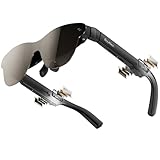
- [World’s Brightest AR Glasses – 1,200 Nits] RayNeo Air 3s Pro smart AR glasses — now with an upgraded 1,200 nits to-eye brightness, the highest in any AR glasses today. Even the faintest stars in the movie are visible instead of pure black, while others can't.
- [HueView 2.0 - Leads Even Father in Micro-OLED Display] Combined with HueView 2.0 — the 5.5th-gen tandem Micro-OLED display, you’ll experience how 200,000:1 and 98% DCI-P3 shape you the most pure and lifelike visuals ever in wearable display glasses.
- [201” IMAX-Level Screen – Movies, Games & Apps Anywhere] 201" virtual display (at 6 m away) glasses for immersive streaming & gaming on any device. Enjoy vibrant colors on your personal cinema with 6 optimized viewing modes, replacing bulky TVs or projectors.
- [Eye Comfort Certified – Binge Without Strain] The only wearable display glasses with TÜV SÜD Low Blue Light & Flicker-Free dual certification, 3,840Hz high-frequency PWM dimming, and 20-level brightness control. Enjoy hours of content with reduced eye fatigue.
- [Vision Correction Setup] For nearsighted or astigmatic users, take the included prescription lens sample to a local optician to make and install lenses. This will sharpen the AR glasses' display.
Controls and basic setup
RayNeo’s current documented controls are as follows:
- Brightness: use the front and rear buttons on the right temple to increase or decrease it.
- Volume: use the front and rear buttons on the left temple.
- Refresh rate: press the left-temple menu button, navigate with the volume button to Refresh Rate, select 60Hz or 120Hz, then hold the menu button for three seconds to exit.
- Colour mode: open the menu, choose Colour Mode, select the desired mode and hold the menu button to exit.
- Whisper Mode: open the menu, choose Whisper Mode, toggle it and hold the menu button to exit.
Firmware can change labels or behaviour. If your controls differ, use RayNeo’s current support pages rather than relying on an older guide.
Gaming, travel and productivity
The Air 3S is especially good for handheld gaming. A large OLED image is more immersive than a small built-in screen, 120Hz is useful when supported, and the glasses are easier to pack than a portable monitor or VR headset. Reviews reported successful use with Apple devices and Lenovo handheld hardware, but those results do not guarantee compatibility with every USB-C device.
Free tools Windows power users keep installed
One-click scans. No signup required.
It is also useful for hotel rooms, flights, watching privately in bed and using a laptop while reclined. A compatible laptop can treat it as an external display, although this does not automatically provide multiple persistent virtual screens.
The weak cases are outdoor work, colour-critical professional work without independent calibration evidence, shared viewing and any situation requiring awareness of traffic or nearby people. The enclosed visual design is immersive but limits environmental awareness. Do not use the glasses while driving, cycling, walking through traffic or crossing roads.
RayNeo Air 3S vs Air 3S Pro
| Feature | Air 3S | Air 3S Pro |
|---|---|---|
| Claimed brightness | 650 nits to-eye | 1,200 nits to-eye |
| Resolution | 1080p per eye | 1080p per eye |
| Refresh rate | Up to 120Hz | Up to 120Hz |
| Weight | 76g | Approximately 76g |
| Virtual screen claim | 201 inches at six metres | 201 inches at six metres |
| Typical official price signal | About $199 sale, $269 regular | About $299 |
The Pro is not simply a faster model. Its defining upgrade is brightness. Choose it if you use the glasses in bright rooms or outdoors, care about the strongest image or face a modest price gap. If nearly all viewing happens in a dark bedroom or hotel room, the standard Air 3S may deliver most of what you need for less.
How it compares with alternatives
- RayNeo Air 4 Pro: RayNeo’s page lists it at about $299 and markets HDR10. It is worth considering alongside the Air 3S Pro, but check regional availability, bundle contents and exact specifications.
- Xreal One and One Pro: Better suited to buyers who prioritise spatial-display positioning and a more developed software ecosystem. They generally cost more.
- Viture Pro XR: A premium alternative for buyers willing to pay more for the display and accessory ecosystem, not a direct budget replacement.
- Meta Quest 3 or Quest 3S: Better for standalone apps, VR games, tracked screens and spatial computing. Worse for users who want glasses-like weight, simple wired mirroring and easy travel.
- Portable USB-C monitor: Better for shared viewing, precise text work and physical multi-monitor productivity. The Air 3S wins on privacy and portability.
Common problems and fixes
No image
- Confirm that the USB-C port supports DP Alt Mode or Thunderbolt.
- Unlock the phone or computer and approve external-display access.
- Try another compatible port.
- Disconnect other external displays.
- Restart the source device.
- For HDMI, confirm that the adapter is powered and receiving video.
RayNeo’s FAQ covers additional troubleshooting.
Blurry edges
Re-seat the glasses and adjust the nose pad and temples. Check prescription inserts, then try another user to determine whether the issue is fit-specific.
Image too dim
Increase brightness with the right-temple front button, check the viewing environment and consider the Air 3S Pro if bright-room use is routine.
Audio leakage
Enable Whisper Mode and lower the volume. Use earbuds when you need maximum privacy; Whisper Mode reduces leakage but does not eliminate it.
Who should buy the RayNeo Air 3S?
- Buy it near $199–$269 if you want an inexpensive private screen, mostly use it indoors and own a confirmed video-capable USB-C device.
- Choose the Air 3S Pro if brightness and outdoor or bright-room visibility matter more than saving about $100.
- Skip both if you need wireless streaming, standalone apps, anchored virtual monitors, complete sound isolation or reliable environmental awareness.
The Air 3S is not an unbeatable universal XR device. It is something more specific—and, for the right buyer, more useful: an unusually good wired personal display at a low current price. Confirm compatibility first, add the cost of any required adapter, and buy the Pro only when its brightness advantage matches your use.
Quick Recap
Product prices and availability are accurate as of the date/time indicated and are subject to change. Any price and availability information displayed on Amazon at the time of purchase will apply.

