The Tool Desk
Outbyte Driver Updater FREEFix the driver behind crashes, sound loss and screen glitchesFind Drivers →Outbyte PC Repair FREERepair Windows errors before they cause bigger problemsFix Now →Soliddd is developing SolidddVision, a camera-and-display wearable intended to help some people with macular degeneration use healthier parts of the retina. The company has demonstrated prototypes and reported encouraging early testing, including reading-speed gains in a 30-person study. But SolidddVision is not currently available for general purchase, has no publicly confirmed retail price or launch date, and its strongest clinical claims remain company-reported rather than independently established in a peer-reviewed publication.
That makes SolidddVision a promising experimental low-vision aid—not a cure, a retinal treatment, or a proven replacement for existing care.

As an Amazon Associate I earn from qualifying purchases.
What is SolidddVision?
SolidddVision is being developed by Soliddd Corp. as an electronic low-vision aid for people with macular degeneration and other conditions that can damage useful vision. Soliddd also mentions diabetic retinopathy, glaucoma, retinal detachment, Stargardt disease, stroke-related visual problems, and other low-vision disorders.
Recommended Free Tools
It is not a conventional prescription lens and does not repair the macula or stop a disease from progressing. Instead, it combines cameras, eye tracking, software, displays, and specialized optics in an attempt to make more of a scene usable to someone with central vision loss.
#1 Best Overall
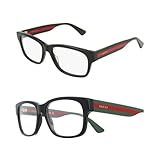
- Iconic Design: Discover the refinement of Gucci GG0343O, featuring sleek rectangular frames that epitomize luxury and high fashion.
- Seamless Functionality: Expertly engineered in Italy, these eyeglasses are perfect for accommodating prescription lenses, offering both unmatched style and practical functionality.
- Collection Highlight: Featured in Gucci's SPRING SUMMER APRIL 2018 collection, these wide rectangular frames embody contemporary style, offering a sleek and understated design that merges functionality with aesthetic appeal.
- Crafted in Italy: Meticulously assembled in Italy, these eyeglasses showcase Gucci’s commitment to premium craftsmanship and unparalleled quality.
- Detailed Measurements: The Gucci GG0343O features a frame height of 40.00mm and a diagonal of 60.90mm, tailored in a large (L) size with dimensions of 57mm lens width, 18mm bridge width, and 150mm temple length, offering a well-balanced fit that combines comfort with ample visual coverage.
Soliddd showed a beta version at HLTH USA in October 2024 and demonstrated the technology at CES 2025. The company’s current product page says the glasses are still in development and are not yet available for sale.
Why macular degeneration is difficult to address
The macula provides the detailed central vision needed for reading, recognizing faces, and examining objects. Macular degeneration can damage that area while leaving some peripheral vision relatively usable. The result may be a central blind spot, missing detail, distortion, or blur.
A simple magnifier does not necessarily solve that problem. Enlarging an image can also enlarge distortion or make it more difficult to navigate. More importantly, people with macular disease do not all have the same pattern of remaining vision. Someone with geographic atrophy, wet AMD receiving injections, dry AMD, Stargardt disease, or a different retinal disorder may have very different visual needs.
That variation is central to evaluating SolidddVision. A device that helps one person may be ineffective, uncomfortable, or unsuitable for another.
How Soliddd says the glasses work
Soliddd’s explanation should be understood as the company’s technical proposal, not as a clinically settled result. Its described system works broadly as follows:
Rank #2

- Lightweight frame design for all-day comfort
- Includes protective carrying case
- Suitable for everyday wear and outdoor activities
- Scene capture: Forward-facing cameras record the surrounding view.
- Eye mapping: Inward-facing cameras track the eyes and estimate gaze direction.
- Image processing: Software adjusts the image for gaze, viewing angle, stereo alignment, and optical effects such as chromatic and spherical aberration.
- Multiple views: Soliddd says the system creates more than 100 distinct views for the two eyes.
- Optical distribution: Proprietary lens arrays project multiple views as parallel rays toward different areas of the retina.
- Perceptual combination: Soliddd says the brain combines the redundant inputs into a single, full-field, stereoscopic image.
The proposed distinction is important. Many electronic low-vision aids magnify a camera image, increase contrast, move an image into a more useful part of the visual field, read text aloud, or identify objects. Soliddd is attempting something more ambitious: distributing visual information across functioning retinal areas so the user may perceive a more complete scene.
That ambition also raises a higher burden of proof. A successful demonstration or reading-chart result would not by itself establish that the effect remains comfortable and useful while walking, turning the head, viewing moving people, coping with glare, or operating in low light.
Crashes, No Sound, or Screen Glitches?
Random freezes, missing sound and display glitches usually trace back to one bad driver. Find and replace yours safely.Free scan · under a minutePC Slower Than It Used to Be?
A free scan shows the junk files, broken settings and background clutter dragging Windows down - then fixes them in one click.Free scan · Windows 10 & 11What evidence has Soliddd reported?
Soliddd says it conducted a study involving 30 people with macular diseases. The company says scientists from Lighthouse Guild reviewed the data and that many participants improved reading ability by at least 50%, with some showing larger gains. Those claims appear in Soliddd’s eye-care professional materials and its CES 2025 announcement.
Soliddd has also described demonstrations involving people with geographic atrophy and other eye conditions, along with continued patient testing and plans for small-stage trials involving selected eye-care professionals.
Those are potentially encouraging signals, but they should be described as company-reported evidence. The public material cited here does not establish all the details needed to judge the result independently, including:
Rank #3

- Size: 52/20/145. Suitable for everyday wear and outdoor activities
- How many participants had AMD specifically, and how many had other diagnoses.
- The breakdown between wet AMD, dry AMD, geographic atrophy, and other conditions.
- Participants’ baseline visual acuity and remaining retinal function.
- The reading test used and whether it was a standardized ETDRS-style assessment.
- Whether the comparison was with unaided vision, a person’s usual low-vision aid, or another electronic device.
- Whether testing occurred immediately or after training and adaptation.
- How long any benefit lasted.
- Adverse effects such as eye strain, headache, dizziness, nausea, confusion, or visual fatigue.
- Whether the findings have been independently replicated or published in a peer-reviewed clinical journal.
“Soliddd reports a 50% reading-speed improvement” is therefore accurate. “SolidddVision is clinically proven to restore sight” is not supported by the public evidence described here.
Is SolidddVision a treatment or cure?
No. SolidddVision is intended as an assistive device. It does not cure macular degeneration, regenerate the macula, remove a blind spot, or replace medical treatment.
Soliddd’s materials describe the glasses as something that may complement medication and surgery. Users should continue regular ophthalmology or retina care, including prescribed injections, monitoring, surgery, or treatment for geographic atrophy where appropriate. An experimental wearable should never be used as a reason to stop treatment.
Is SolidddVision FDA-approved?
Soliddd’s CES announcement says the glasses are considered a low-vision aid and that the company believes they require no FDA approval for commercialization in the United States. That is Soliddd’s regulatory position, not evidence that the FDA has approved SolidddVision or issued a public determination covering every future version, software feature, intended use, or marketing claim.
A product may be marketed as an assistive aid without being approved as a disease treatment. That does not mean it is clinically proven, risk-free, or endorsed by the FDA. Hardware, software, and claims that a product diagnoses, treats, cures, mitigates, or prevents disease can raise different regulatory questions.
Recommended Free Tools
Rank #4
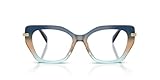
- FRAME FEATURES: MK4167U Nashville Universal Fit feature a hexagonal, navy gradient frame.
- UNIVERSAL FIT: Frames with a "Universal Fit" have a narrower bridge and longer, more curved nosepads to increase the grip on the nose with a reduced curved shape that reduces the space between the frame and your cheekbones.
- PRESCRIPTION READY EYEGLASS FRAMES: Michael Kors eyeglass frames feature lenses that need to be replaced with prescription lenses so you can enjoy clear vision.
- CASE & CLEANING CLOTH INCLUDED: Each pair of Michael Kors eyeglass frames comes with a cleaning cloth and case to store and protect your sunglasses from scratches and damage.
- VISIT THE MICHAEL KORS SHOP: Click on the Michael Kors link above the product title to shop the entire Michael Kors sunglass and eyeglass assortment.
When will SolidddVision be available?
Soliddd has shown prototypes and beta hardware, but the latest official information supplied for this article still describes SolidddVision as in development and unavailable for sale. No confirmed general-release date, public retail price, order page, or shipping schedule is given in the cited material.
In practical terms, a demonstration at CES is not the same as a product a patient can purchase, receive, have fitted, and return. Anyone contacting Soliddd should clarify whether an opportunity is a research study, a clinical demonstration, a beta evaluation, or a commercial sale.
Likely practical limitations
Even if the optical concept works for selected users, the final experience may depend on factors that are not yet publicly documented in sufficient detail:
- Patient selection: The system may require usable peripheral retina or particular remaining visual pathways.
- Adaptation: Users may need training before the brain can interpret the multiple views comfortably.
- Eye tracking: Calibration could be affected by unusual eye movements, nystagmus, eyelid obstruction, or inaccurate eye mapping.
- Lighting: Glare, darkness, backlighting, and rapidly changing light may challenge cameras and displays.
- Motion: Reading a stationary chart is different from walking, turning, riding in a vehicle, or following a moving person.
- Latency: Delays between camera capture and display could affect comfort and mobility.
- Depth perception: Two-eye or stereoscopic claims need real-world testing; they should not be inferred solely from having two displays.
- Battery and comfort: Reliable public figures for battery life and final production weight have not been established in the supplied official material.
- Prescriptions: It is not yet clear how prescription correction will be incorporated into a production model.
- Changing vision: A device may require recalibration as a patient’s condition changes.
- Privacy: Forward- and inward-facing cameras raise questions about recording, cloud processing, biometric eye data, and retention.
- Safety: Improved device-assisted vision does not automatically make driving legal or safe.
How SolidddVision compares with available alternatives
SolidddVision’s eventual competition will not just be other smart glasses. It will also include electronic magnifiers, audio tools, rehabilitation services, and ordinary adaptations that are already available.
Quick wins for a faster PC:
Scan for outdated or missing drivers - takes under a minuteDriver Scan →Repair Windows errors before they cause bigger problemsFix Now →Fix the driver behind crashes, sound loss and screen glitchesFind Drivers →eSight Go
eSight Go is a purchasable digital low-vision device designed for central vision loss, including AMD. It uses a camera, displays, autofocus, magnification, and image enhancement rather than Soliddd’s proposed multi-view retinal distribution. The company’s pricing page lists a $4,950 USD MSRP and a seven-day home experience trial priced at $250, with the fee deducted from the purchase price if the customer buys.
It may suit someone who needs an available product with published pricing and a trial process. It is not a treatment and may not feel like ordinary eyeglasses.
IrisVision Vista
IrisVision Vista is a hands-free low-vision headset offering magnification, contrast modes, text reading, image capture, voice controls, and an AI assistant. The official pages reviewed provide a purchase path but not a reliable public price. Its emphasis is digital assistance and magnification, not reconstruction of a full visual field.
NuEyes Pro 4
NuEyes Pro 4 is marketed as a low-vision wearable with magnification, contrast controls, visual-AI and accessibility features. The official site directs prospective buyers to contact the company rather than displaying a clear retail price. It may be relevant for people seeking a current commercial wearable, but buyers should ask for objective evidence, fitting support, warranty terms, and total cost.
OrCam devices
OrCam MyEye and OrCam Read address a different problem. Depending on the model and configuration, they read text aloud and identify selected objects, products, barcodes, or faces. They can be useful when the main need is access to printed information or object identification, but they do not restore visual acuity or reconstruct a visual field.
Lower-tech and non-wearable options
Handheld and desktop electronic magnifiers, smartphone magnification and OCR, screen readers, large-print materials, improved lighting, glare control, occupational therapy, and orientation-and-mobility training may be more practical or affordable than a head-mounted display. A low-vision assessment can help identify the combination most suited to a person’s actual tasks.
Questions to ask before joining a demonstration or trial
- Is this a research prototype, beta headset, or commercial product?
- What diagnoses and visual-acuity ranges qualify?
- What objective reading or mobility tests will be used?
- Is the test free, and who pays for travel or clinical fitting?
- How much training and calibration are required?
- What are the battery life, weight, field of view, and prescription-lens options?
- How does the system perform outdoors, in glare, in low light, and during movement?
- What data do the cameras capture, where is it processed, and how long is it retained?
- What are the return, warranty, repair, and replacement-battery policies?
- What happens if the user’s eye condition progresses?
- Does the provider advise against driving or other safety-critical activities?
What prospective users should do now
- Continue care with an ophthalmologist or retina specialist.
- Ask for a referral to a certified low-vision rehabilitation professional.
- Contact Soliddd through its official website if interested in testing or provider information.
- Compare any demonstration with the person’s usual low-vision aid, not only unaided vision.
- Request standardized results and information about adverse effects.
- Do not treat testimonials as guarantees.
- Do not assume device-assisted vision makes driving safe or lawful.
Bottom line
SolidddVision is a legitimate development effort built around an ambitious optical idea: use gaze tracking and multiple projected views to route visual information toward functioning retinal areas. Soliddd’s preliminary, company-reported results are interesting, especially for reading, but they do not yet establish broad, durable, independently verified benefits.
As of the latest official information reviewed, SolidddVision remains experimental and unavailable for ordinary purchase. People who need help now should pursue low-vision rehabilitation and compare currently available tools such as electronic magnifiers, audio readers, and commercial visual-enhancement devices—without delaying medical care.
Quick Recap
Product prices and availability are accurate as of the date/time indicated and are subject to change. Any price and availability information displayed on Amazon at the time of purchase will apply.




