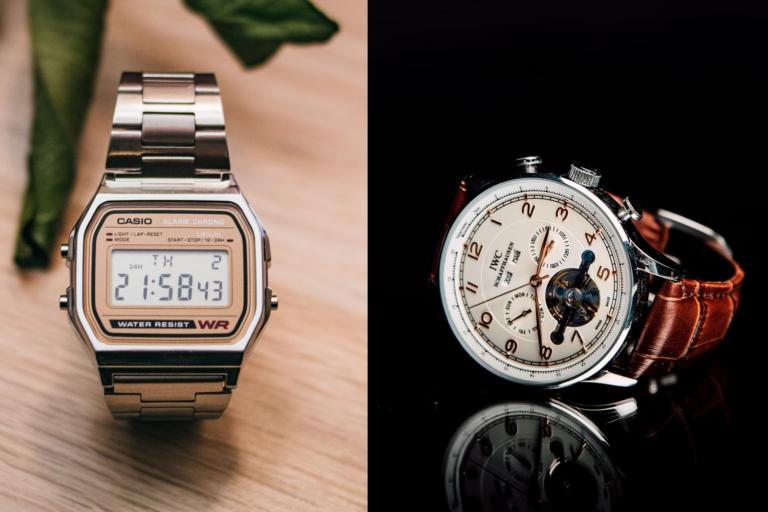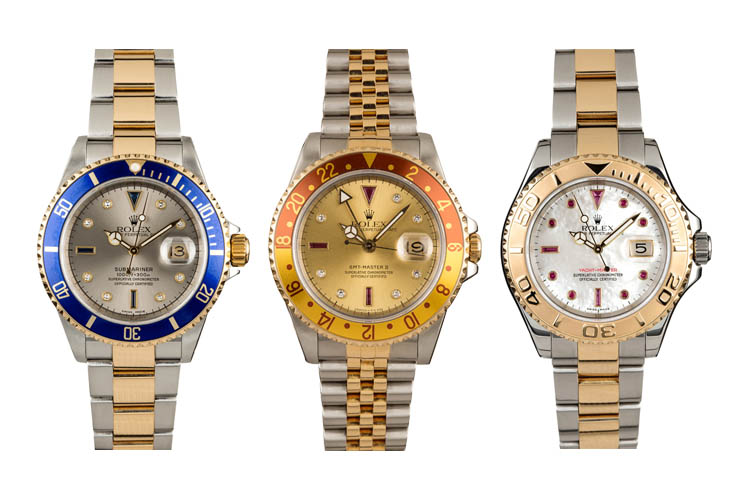
In terms of watch movements, the most common types you would encounter are mechanical or quartz movements. (Although of course, there are other types of watches: such as solar or kinetic, chronometer, and spring drive.
Before the rise of battery-powered quartz movements, watches were being run only by a rigorously assembled clockwork mechanism. This means that mechanical watches are carefully crafted to ensure functionality and reliability. Such is the reason why watch collectors usually prefer mechanical watches.
As an Amazon Associate I earn from qualifying purchases.
One of the main types of watch complications that can be added to the watch dial is the Date or Day-Date (date and day of the week) or more advanced options include adding the month to the dial (Calendar) and even the perpetual calendar option that automatically takes into account the number of days in each month when going from one month to the next and even leap year while changing to the next year.
Free tools Windows power users keep installed
One-click scans. No signup required.
So the next question for many people is, how exactly does it keep track of the date accurately? That is the question that we will answer in this post so read on!
#1 Best Overall

- ⌚ MENS WATCHES ANALOG: Mens military watches made with shock-resistant stainless steel case and anti-scratch mineral window, exquisitely crafted and durable. Men's watch strap width: 22mm / 0.86 inches, stainless steel case: 42mm / 1.65 inches.
- ⌚ MILITARY WATCHES FOR MEN: This mens field watch is very suitable for active lifestyles, with a comfortable double nylon strap, will suitable for personal use and good for anniversary, graduation, business, birthday , the father's day , Christmas .
- ⌚3 ATM WATERPROOF MILITARY WATCHES: 30M waterproof, sweat-proof, rain-proof and hand-washing for daily life, no problem. But NOT suitable for swimming, bathing, diving or touch hot water. Perfect for most of indoor / outdoor sports.
- ⌚ EASY TO READ TIME: 12 / 24 hrs military time and luminous dial. The mens watches equipped with date calendar can tell you the time quickly and accurately. Come with luminous function, easy to read the time even in the dark.
- ⌚ PURCHASE WITHOUT WORRY: Japan imported quartz analog movement and battery, long-term operation. for 1 years,24-hour customer service is at your service.
Components
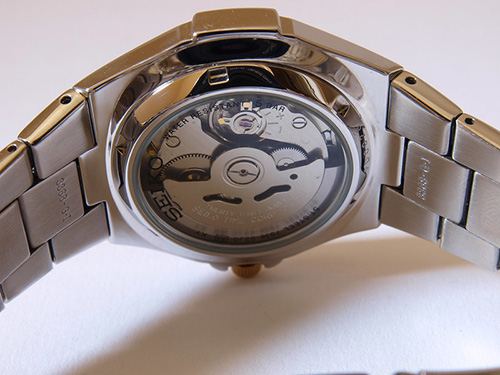
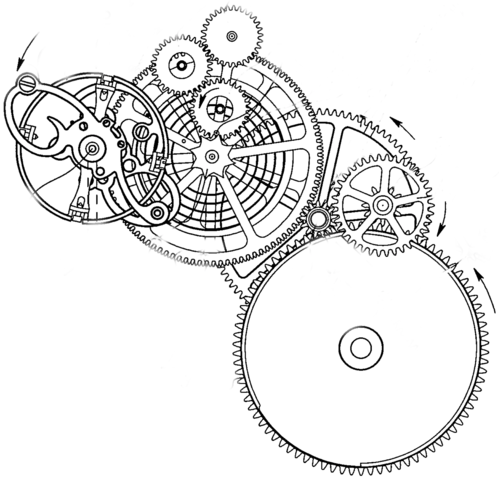
To explain the mechanism under a mechanical watch, we’ll go through its five primary components, and how each one contributes to the mechanical movement.
Mainspring
We start off with the most vital component – the mainspring or long spring. It is where the potential energy is being stored then as the mainspring slowly unwinds, it transfers the said energy which triggers the clockwork mechanism.
Wheel train
Also called a gear train, the wheel train is the one connecting the mainspring with the escapement. As such, it serves two functions – one is to transmit the force from the mainspring to the balance wheel, and the other is to drive the timekeeping hands.
Keyless Work
This component is the one that allows the user to wind the mainspring and to move the hands to set the time.
Balance wheel
As mentioned above, the force from the mainspring is being transferred to this part. The said force powers the balance wheel to oscillate back and forth at the same amount of time. It, therefore, serves as the timekeeping element of the mechanical watch.
Rank #2

- ⌚ [ Multifunctional Digital Watch ] This versatile functional watch features dual time display system supporting both 12-hour and 24-hour modes, together with clear date window display. You can check the time anytime, anywhere, and clearly see the exact time in 12-hour or 24-hour format.
- ⌚ [ 5ATM Waterproof ] The watch owns reliable 5ATM 50-meter waterproof performance, which can effectively cope with daily sweat, sudden rain and hand washing scenarios. Kindly remind you that this watch cannot be worn while taking showers, swimming, diving or enjoying hot water baths to avoid internal water damage.
- ⌚ [ Solid & Durable ] Constructed with high-hardness scratch-resistant mineral glass watch face and soft skin-friendly silicone watch strap. This combination greatly improves the durability of the watch, bringing you stable service life and comfortable wearing experience for long-term daily use.
- ⌚ [ Various Scenarios ] It works well for various usage scenarios including daily life, medical care work, military training and all kinds of outdoor sports. With practical design and universal size, this watch is a great daily accessory that fits different groups of people.
- ⌚ [ Buy with Confidence ] We're here to help, 24/7. If you experience any issues with our watches, don't hesitate to contact us. We offer a 24-hour solution service to ensure your complete satisfaction with your purchase.
Escapement
The escapement mechanism, which is composed of the escape wheel and the pallet fork, also serves two functions. First, it gives the balance wheel a little push with each swing to keep it vibrating. It is also responsible for allowing the gears to either advance or “escape” by a particular amount with each swing of the balance wheel.
Automatic vs Hand-wound
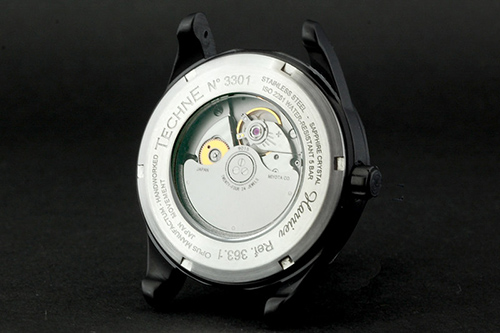
Common watch consumers tend to assume that mechanical watches are automatically self-winding or automatic considering their large volume in the watch market. However, such is not the case. Mechanical movements, in fact, may either be self-winding or hand-wound. Let’s discuss the difference between these two in this section.
Quick wins for a faster PC:
Repair Windows errors before they cause bigger problemsFix Now →Fix the driver behind crashes, sound loss and screen glitchesFind Drivers →Mainly, an automatic/self-winding watch is equipped with a rotor that spins whenever you move your wrist. As the rotor spins, the watch winds up and the mainspring is being tightened again. On the contrary, a hand-wound watch does not come with a rotor. As such, its owner needs to carefully wind it periodically to make it work.
For the automatic watches, one significant downside is that they are usually heavier and thicker compared to hand-wound ones because the rotor attached to the movement is weighted. Accordingly, hand-wound ones are thinner and lighter on the wrist.
The disadvantage of the hand-wound, however, is that they may wear out prematurely because of the constant need to turn the crown to wind the mainspring. This aspect, of course, is an advantage for automatic watches since they won’t easily wear out and the users don’t even have to worry about winding the watch at all.
Rank #3

- Exquisite sunburst dial — delicate radial brushing radiates from the center, catching light with every wrist movement like sunlight through mist. Rich depth and layered light reflections transform with every turn. A level of refinement flat dials simply cannot match.
- Unidirectional rotating dive bezel with green luminous markings — inspired by legendary professional dive watches. Precisely track dive time or countdown intervals; bezel markings remain visible in low light. Professional-grade functionality on your wrist.
- Date display window at 3 o'clock for convenient daily planning. Fully automatic mechanical movement winds itself through daily wear — no battery ever needed. Precision timekeeping, self-powered.
- Comprehensive green luminous coverage — dial hour markers, hour hand, minute hand, and second hand all coated. Easy reading in any dim environment: late nights, movie exits, night rides, or camping. Clear time, day and night.
- 44.5mm bold diameter designed for global appeal; 200mm strap fits most wrists; ultra-light 120g. 30m/3ATM water resistant for daily use. Solid stainless steel band for formal elegance. 2-Year Brand Warranty included.
Date-keeping in Mechanical Watches
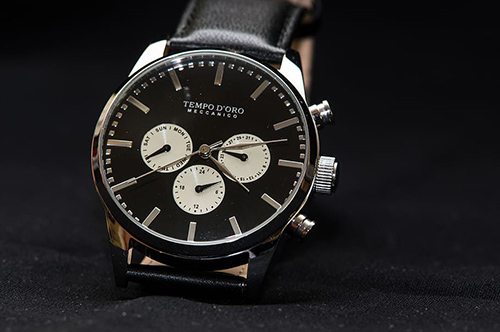
Now that we’ve understood the basics of the timekeeping mechanism in mechanical watches, let us move on to how they keep the date.
Crashes, No Sound, or Screen Glitches?
Random freezes, missing sound and display glitches usually trace back to one bad driver. Find and replace yours safely.Free scan · under a minutePC Slower Than It Used to Be?
A free scan shows the junk files, broken settings and background clutter dragging Windows down - then fixes them in one click.Free scan · Windows 10 & 11In general, mechanical watches with date features have an additional specific set of gears in them that are equally delicate. It can ruin your watch’s movement if you happen to change the date of your watch hastily. One key component of a mechanical watch with a date window is a date wheel. The mechanical movement needs to accumulate and generate more power to make this date wheel move forward. For most mechanical watches, the increment is every 24 hours and it runs from 1 to 31. Meaning, the wearer has to manually adjust the date on the first day of the following month if a month has less than 31 days.
Since adjusting the date in mechanical watches should be done in the proper way to keep their movements working properly, it is a good thing that watchmakers have also developed more advanced complications that can track our calendars more accurately. These are the annual calendar watches and perpetual calendar watches.
Annual Calendar
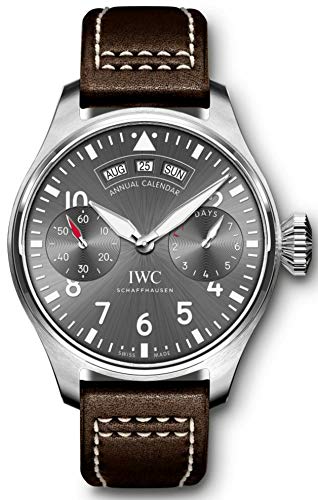
This particular complication can display the day, date, and month of a complete calendar. This means that it can display 30 and 31-day months accurately. Although, you still need to adjust the date manually at the end of February.
Perpetual Calendar
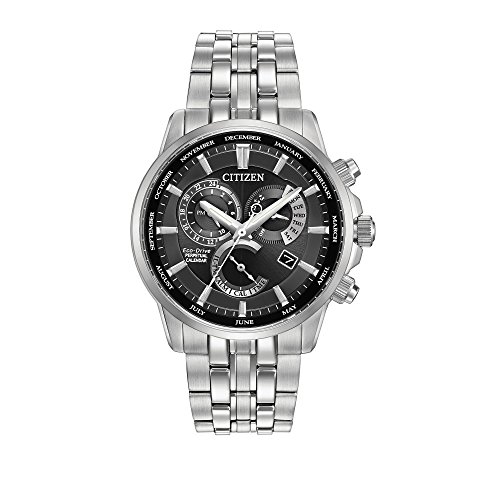
The perpetual calendar is quite more advanced than the annual calendar. Aside from considering the number of days in a month, it has also determined the number of days in any given year until 2100. Meaning, you don’t have even have to adjust the date every February EVEN if it’s a leap year! The next time you have to manually adjust the date in a perpetual calendar watch is when we go from Feb. 28, 2100 to March 1, 2100.
Quick wins for a faster PC:
Clear out junk files and repair common Windows errorsFree Scan →Fix the driver behind crashes, sound loss and screen glitchesFind Drivers →Rank #4

- ⛵ Diver-Inspired Design with Automatic Movement: This watch requires manual winding, This men's green mechanical watch features a bold diver-style bezel, luminous hands, —perfect for men who appreciate the charm of traditional watchmaking.
- 📏 Ideal Size & Fit for Everyday Comfort: Crafted with a 40mm alloy case and 13mm thickness, this men’s automatic wristwatch offers a balanced presence on your wrist. The stainless steel bracelet measures 20mm wide and fits wrists up to 190mm in circumference. Its 118g net weight gives it a solid, premium feel while remaining comfortable for long wear.
- 🌊 Water Resistant for Daily Use: This automatic men's watch is water-resistant for everyday life—splash-proof and safe for handwashing, but not suitable for swimming or bathing. Whether you're headed to the office or the outdoors, this men's waterproof mechanical watch is built to handle your daily lifestyle with confidence.
- 💡 Luminous Hands: Equipped with luminous hour markers and hands, this green dial men's watch allows for easy reading in low-light conditions. The rotating bezel adds a sporty edge and practical timing function, making it not only stylish but also purposeful—ideal for work, travel, or casual use.
- 🎁 A Versatile Gift Choice with Timeless Appeal: With its eye-catching green sunray dial, classic Submariner-style case, and stainless steel bracelet, this men's automatic mechanical watch makes an exceptional gift for birthdays, anniversaries, Father's Day, or holidays. A must-have for any man who values precision and design.
For further clarification check out the difference between Annual Calendar vs Perpetual Calendar watches.
Setting the Date
So how do you adjust the date if you don’t have a perpetual calendar watch? Here are some quick tips and steps to do so. Remember, you have to do it properly; otherwise, the internal mechanism of your watch could be damaged.
The first thing you have to remember is not to change the day and date between 9 pm-3 am. Why? You have to avoid this period because it’s the time when the specific gears usually start to shift.
One good recommendation is that you set the date when the time is set at 6:30. Whether AM or PM, it is outside the prohibited period of 9 pm-3 am. It’s also pretty easy to remember since both the hour and minute hands will be pointed to the 6 o’clock position.
Next, you’re ready to turn the crown. If your watch has a day and date function, turning the crown clockwise will change the date, and turning the crown counterclockwise will change the day (This applies to most watches). That’s it!
Closing Words
Mechanical watches may be more costly compared to quartz ones considering their rigorous watchmaking production process. Yet, they sure are great investments especially if you are an avid watch enthusiast or collector. One thing you have to remember (that we’ve also been repeating throughout this post) is that they are delicate. The mechanical movement is powered only by internal mechanisms so be extra careful and keep your precious watch safe from any shocks, water, or magnets.
Quick Recap
Featured Image: Pixabay
Product prices and availability are accurate as of the date/time indicated and are subject to change. Any price and availability information displayed on Amazon at the time of purchase will apply.